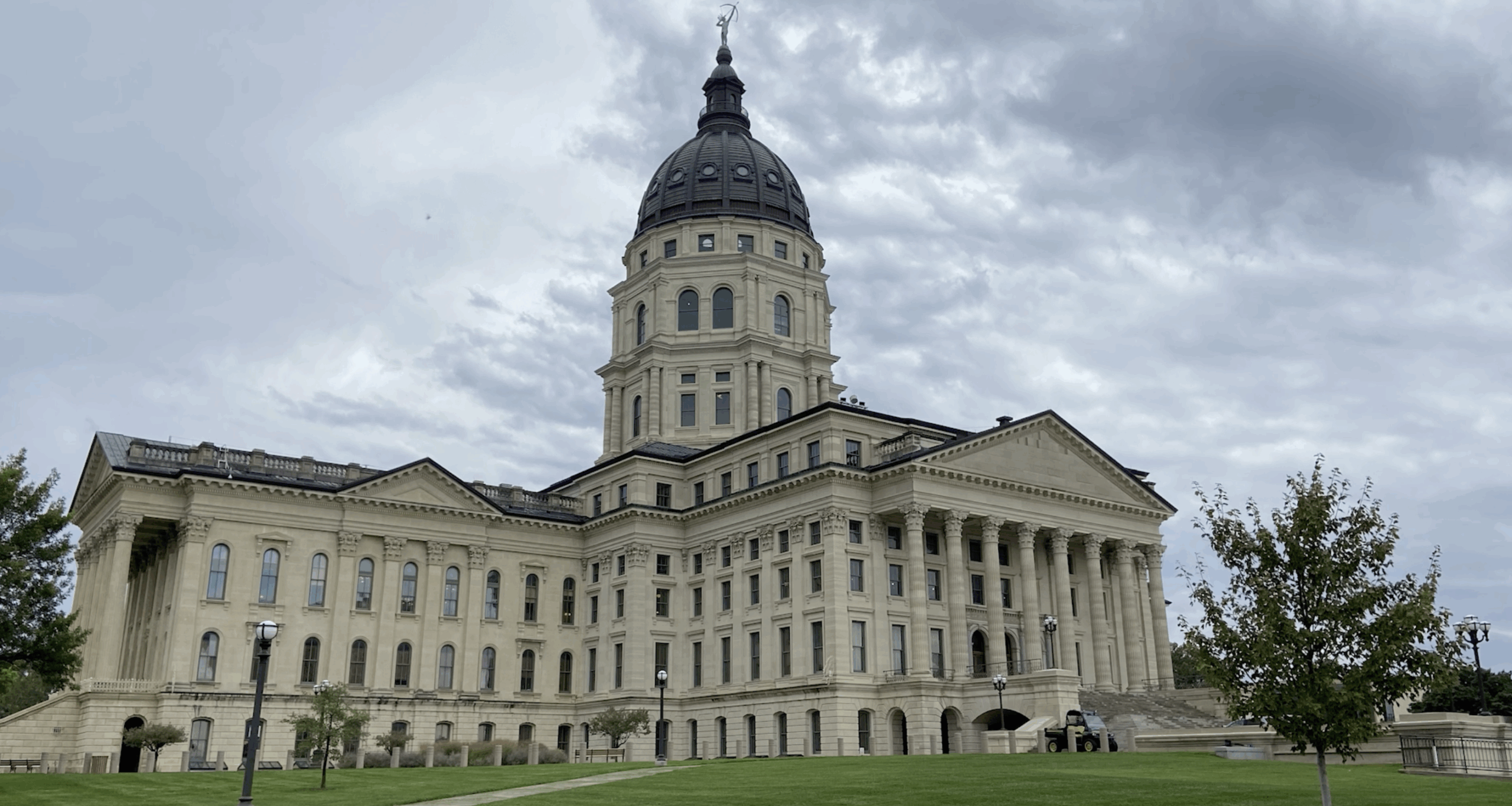
What it takes to redistrict the state, targeted representative responds to efforts
Jonah Kahn | @jonah_kahn
The federal administration is urging many states to redistrict their congressional districts, hoping to give the Republican Party more seats in the House.
One of the states that recently redistricted the map was Kansas’s neighbor, Missouri. This map splits up Kansas City into several districts. However, the newly drawn map is still facing several legal challenges.
How it works
The federal administration and Kansas republicans now want to redraw Kansas’s congressional districts.
For this to happen, a special legislative session would need to be called. Maps would need to be drawn, voted on and passed into law with a majority from both Kansas legislative chambers, (he House and Senate.
Why redistrict?
Some republican lawmakers in Kansas have been more vocal on social media that they are targeting Kansas’s third congressional district.
Sharice Davids represents this district, which includes both Johnson and Wyandotte Counties, areas that often go blue in elections.
“I think there are some concerns from members of the legislature in both parties that this isn’t an appropriate time to do this and that it really does go outside of the norms and the procedures that we normally do here in Kansas,” Representative Jo Ella Hoye (D-Lenexa) said.
Why some don’t want to redistrict
Many local democrats and some republicans feel it’s unnecessary or not an appropriate time to redistrict.
Redistricting typically occurs every 10 years after the most recent census is completed. Doing it every 10 years accounts for population changes in certain areas and makes voters’ voices heard.
The most recent redistricting in Kansas occurred just three years ago, and many feel it is a waste of taxpayer dollars and time to call a special session when they feel there is no need to redistrict Kansas.
Republicans reasoning
Many of the republicans are targeting Davids’ district, with a goal of unseating her. By doing this, they look to add another red seat to the House.
Can it be stopped?
“If a map does get put forth, and it seems like one will, more than likely, Laura Kelly, the governor of Kansas, will more than likely try to veto, strike it down. Now, with the cases of Kansas’ constitution, it still does allow for a two-thirds majority,” Grant Hansen, Political Science Graduate Teaching Assistant at KU, said.
Because Kansas is partisan, a two-thirds majority vote from legislators could overrule Governor Kelly’s veto.
The Kansas House has 125 senators, with a republican majority. This would give them the advantage if they wanted to override any veto from the governor.
Gaining traction
On Oct. 13, funding for a special session focused on redistricting was approved.
The Kansas Legislative Coordinating Council approved the following:
- $400,000 in State General Fund for a redistricting special session
- $60,000 in State General Fund for redistricting license fees in Fiscal Year 2026
The Legislative Coordinating Council is tasked with managing administrative matters and rules governing legislative committee work when the state legislature is not in session. It also plays a major role in funding legislative agencies and activities.
Sharice Davids’ response
“This all comes down to literally grasping and grabbing for as much political power as possible,” Representative Sharice Davids (D-Kansas) said.
Davids is up for re-election in 2026, and is the only democrat who represents Kansas in D.C.
She feels that republicans are cheating to give them more control, since they are realizing many of their ideas are not popular and otherwise would not be voted into office.
Kansas Senate President responds
KUJH reached out to several republican lawmakers, including the other three congressional district representatives and both senators.
Senate President Ty Masterson, who is running for Kansas Governor, was the only one to respond to questions via email about redistricting, saying:
“The Kansas Senate is advancing a petition for a special session to address congressional redistricting, strengthen SB 180, review property tax solutions, and tackle other time-sensitive issues,” Masterson said. “The Senate will have no trouble securing enough signatures to convene the special session and consider these important matters. We’re targeting early November to address these time-sensitive issues and maximize the opportunity for all our congressional districts to fairly represent Kansas in Congress, empowering President Trump to advance America’s greatness.”
Davids said she believes that if the Kansas Map is redistricted, it will have the opposite effect.
“The impact is that the voices of the Kansas voter are silenced and that all kinds of ramifications in the near term and long term,” Davids said.
She called this move by republicans gerrymandering, and is helping the federal administration’s agenda. She added that people choose who they want to represent them and make their voices heard, and by redistricting Kansas, this is the opposite of that; redistricting will silence the voice of the voter.
“It’s egregious,” Davids said.