Cattle collars: The future of ranching
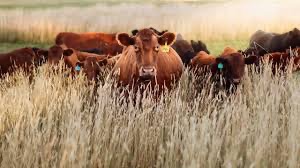
Ranching has looked much the same for generations. Since the invention of barbed wire in the late 1800s, fences have defined pastures and controlled cattle movement across the American range. But in the Flint Hills of Kansas, some ranchers are experimenting with a surprising tool that could reshape the future of the industry: shock collars.
Originally designed to keep dogs from wandering away, the technology is now being adapted for cattle. Ranchers say the collars can create virtual fences, allowing them to guide and manage their herds without building miles of traditional fencing.
For Chase County rancher Daniel Mushrush, the technology is about more than novelty, it’s about efficiency.
“With this, we can apply a lot of animals to a certain area, graze it off really quickly, and then simply move on to another place and let that grass rest and recover,” Mushrush said. “Instead of thinking in terms of grazing a piece of ground four, five, six months out of the year, any given acre on the ranch is maybe grazed two to three days out of the year.”
That approach, known as intensive rotational grazing, could dramatically change how effectively ranchers use their land. Mushrush says ranching has traditionally been an inefficient system, where only a small portion of available grass actually ends up feeding cattle.
“Only about 15 percent of the grass grown actually goes into cattle’s mouths,” he said.
By moving cattle more frequently and allowing pastures time to recover, Mushrush believes that number could climb dramatically.
“Instead of looking at, like, a 15 percent efficiency, all of a sudden you’re starting to look at 70 or 80 percent,” he said. “Those are real numbers. That’s like growing your ranch several times over without having to buy more land.”
The collars may also help ranchers manage rising costs. A global 10 percent tariff on imports has driven up the price of steel, making traditional fencing significantly more expensive. In regions like the Flint Hills—where rocky ground and rugged terrain make construction difficult—the price can be especially steep.
“‘Every generation has to build the entire ranch’s fence one time’ has kind of been the saying,” Mushrush said. “Here in the Flint Hills, it’s rocky, there’s terrain… you’re going to be $25,000 a mile for something that’s, quite frankly, pretty archaic.”
Virtual fencing offers an alternative. Instead of posts and barbed wire, ranchers can establish digital boundaries that guide cattle movement through audio cues and mild electric pulses delivered through the collars.
Beyond efficiency and cost savings, Mushrush says the technology offers something ranchers often struggle to find: time.
“It gives you some of your life back,” he said. “It lets you spend more time with people you care about. It’s easy to miss that baseball game or miss that music concert because you have to move cattle or check cattle.”
The system can even be controlled remotely through a smartphone. Mushrush recalls adjusting his herd while traveling abroad.
“A couple months ago we were in Argentina, and I showed somebody I moved cows in Chase County from Argentina,” he said.
While the collars require a significant upfront investment, Mushrush believes the technology could transform ranching for future generations, changing not only how land and livestock are managed, but also how ranchers balance work and life on the range.
For an industry rooted in tradition, the next big change may come not from barbed wire, but from Bluetooth.
Watch the segment here: