Indigenous food culture, sustainability highlighted at Indigenous Food Sovereignty Summit
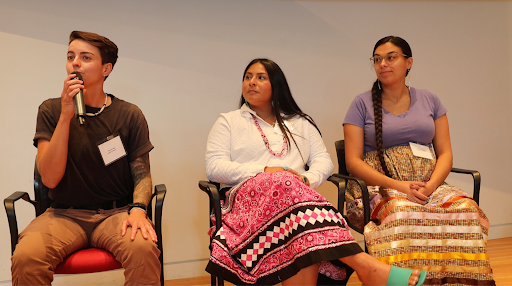
Tribal nation leaders, educators, researchers and students gathered at the Lied Center Wednesday at the Indigenous Food Sovereignty Summit to learn about strengthening Indigenous food systems.
The event was part of the Sovereign Futures Series through the Office of Sovereign Partnerships and Indigenous Initiatives to talk about food preservation, restoration and sustainability in tribal communities.
“I think when we put it in its most simplest terms, food sovereignty is really just the right to food, the right to our food ways, our practices that involve our food,” said event organizer Kelly Nalani Beym. “But more importantly with Indigenous food sovereignty, it’s the right to have our culture continue to remain attached to those foods and food systems.”
For presenters, it wasn’t just about sharing information, but the stories that come with them.
“All of the stories that come with me really shape how I look at policy,” Beym said. “One of the things I shared in my presentation was I’m carrying forward the prayers of my ancestors that negotiated our treaties. So now what are we doing to carry that work forward?”
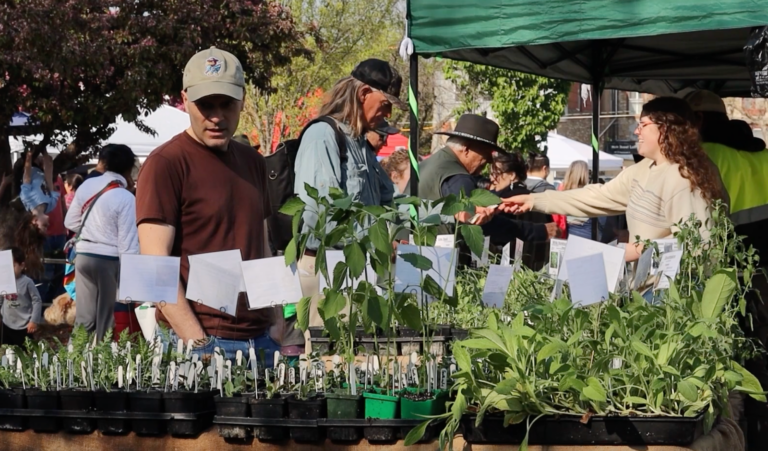
Event attendees were able to participate in a community seed exchange and observe food preservation traditions at a demonstration fair.
For panelist Aiyanna Tanyan, who works at the Haskell Indian Nations University greenhouse, protecting and cultivating traditional seeds is one of the most important aspects of food sovereignty.
“Seeds carry our stories, and when we start to lose seeds, we start to lose connection of those stories — and a lot of those stories are our creation stories,” Tanyan said.
Event attendees left Wednesday’s event with new knowledge about their role in food systems and with full stomachs, thanks to local chef Jason Champagne.
Watch the segment here: